2026 Chinese Grand PrixFollow the action at the 2026 Chinese Grand Prix with VCARB as teams battle it out in Shanghai.
The Chinese Grand Prix is a defining stop on the Formula One calendar. For us, it represents one of the clearest technical examinations of the early season. China blends scale with precision, exposing the details behind performance.
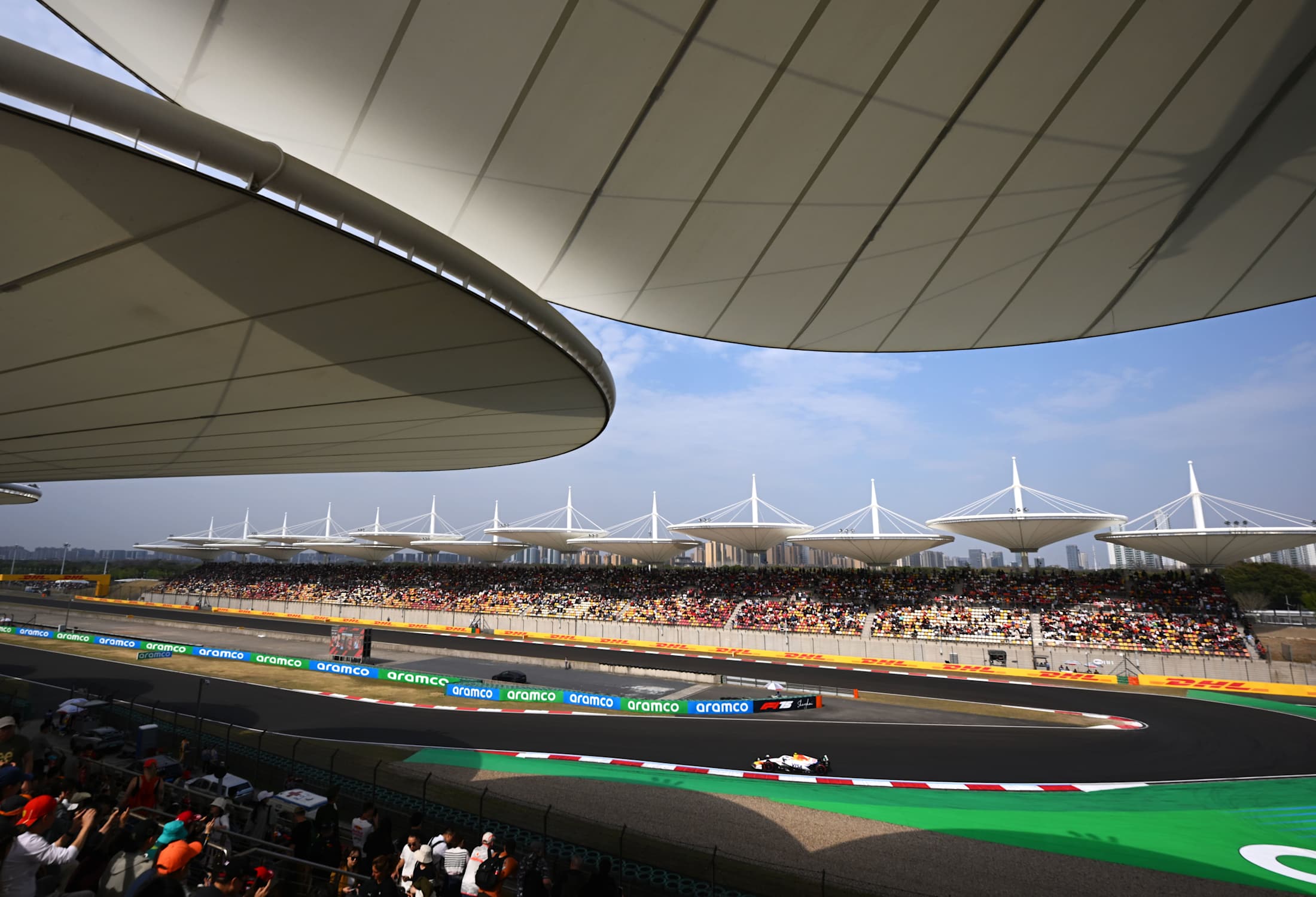
At the centre of the weekend is the Shanghai International Circuit, a purpose-built venue recognised for both its architecture and its demanding layout. The track was designed to echo the Chinese character shang, meaning above or ascend, and its configuration reflects that ambition through sweeping opening corners and one of the year's longest straights.
Understanding the layout
Shanghai is defined by contrast. The opening complex tightens progressively, placing sustained load through the front tyres and challenging balance on corner entry. Later in the lap, the back straight places full demand on power unit performance and energy deployment before a heavy braking zone into the Turn 14 hairpin.
Core characteristics include:
Long-duration lateral load through Turns 1 and 2
A straight that prioritises aerodynamic efficiency
Heavy traction demands out of slow-speed corners
One of the highest braking energy events of the season
For us, this creates a clear engineering brief. We must balance straight-line efficiency with enough downforce to protect the tyres through the opening sector. Tyre management is often decisive here, particularly on the front left, which carries significant stress over a race distance.
Operational focus
Shanghai rewards disciplined execution. Overtaking into the hairpin is realistic, which increases strategic variation and places pressure on pit wall decisions. Undercuts can be powerful if degradation is high, while safety car timing can shift track position quickly.
We approach China knowing that small details matter. Energy deployment, braking stability and tyre preparation all influence lap time in measurable ways.

 13 – 15 MARCH